In brief
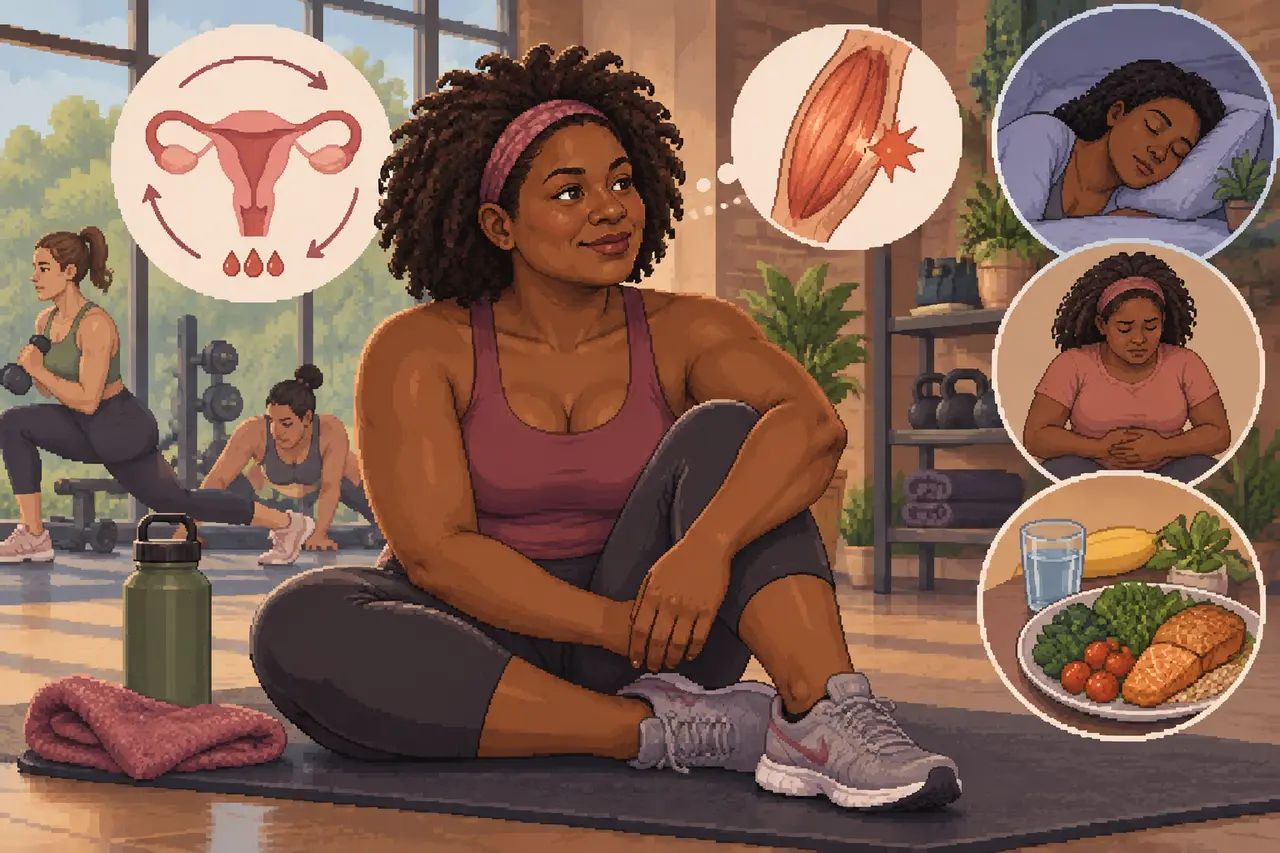
- Scientific evidence demonstrates no statistically significant increase in muscle injury risk across different menstrual cycle phases.
- Fluctuations in estrogen and progesterone produce only small and inconsistent effects on strength, neuromuscular control, and overall athletic performance.
- Individual symptom burden such as fatigue, cramping, and poor sleep influences your daily exercise tolerance far more than calendar days.
- Rigid training schedules tied to cycle phases lack empirical support, making flexible adjustments based on personal recovery far more effective.
Menstrual Health, Sports Injuries, and Training Tolerance
You step onto the running track on a crisp morning and feel a familiar cramp in your abdomen. Doubts creep in. Online videos warn against certain weeks of the month, and hearing alarming claims about menstrual cycle sports injuries leaves many active women feeling nervous before an intense workout. You want to push hard today. Yet you suddenly fear a painful muscle tear. Stop worrying. Modern exercise science provides reassuring facts that put your actual sensations back at the core of training.
Modern athletic research no longer focuses solely on counting days on a calendar. Some days feel effortless. Other days feel heavy and slow. A major 2026 scientific review proves that practical symptom burden and good nutrition matter far more than cycle phases. Do not fear specific weeks. Learn to read your physical capacity without stress. It works.1
Menstrual Cycle Sports Injuries: What Science Actually Shows
A 2026 meta-analysis examined muscle injury rates among 318 competitive female athletes across different sports. Researchers compared the follicular phase directly with the luteal phase. They found no difference. The pooled risk ratio was 1.18, confirming that neither phase posed an elevated danger to muscle tissue. When analyzing menstrual cycle sports injuries, the evidence shows that women are not inherently fragile during specific phases. The numbers are clear.2
From these empirical findings, the authors drew a clear lesson for your workouts. Mandatory rest days tied to the calendar make no sense. Hormonal status does not reliably predict whether an athlete will sustain a muscle strain during high-intensity training. Do you feel strong today? Go for it. Your body does not require artificial restrictions, but rather honest respect for real-time fatigue.2
Biological Mechanisms and Real Athletic Performance
Laboratory tests often examine how estrogen and progesterone affect connective tissue laxity and nerve signaling. Estrogen might loosen tendons in theory. Yet reality looks very different. A major 2026 narrative review explains that these theoretical mechanisms produce only trivial effects during actual athletic performance. Measured performance differences between phases remain consistently small and vary wildly across published investigations. Theory is not reality.1
A similar principle applies to athletes who use hormonal contraceptives like oral birth control pills. These medications flatten ovarian hormone swings, but studies show they provide no consistent shield against muscle injuries. Every woman responds differently to synthetic hormones. Broad rules fail. Your sleep, recovery routine, and total training load matter far more than whether your hormones fluctuate naturally.1
Symptom Burden and Daily Nutritional Support
What factors truly dictate your physical capacity and injury risk? In discussions of menstrual cycle sports injuries, researchers emphasize that actual symptom burden represents the most decisive factor. Severe cramps, poor sleep, nausea, and deep exhaustion drain your strength. Pain ruins focus. Attempting to push through severe discomfort often alters movement mechanics and increases the risk of an accidental strain. Listen to your pain.
Alongside symptoms, eating enough wholesome food builds the true foundation for strong muscles and tendons. Your metabolic rate and appetite can shift slightly across the month. When your body lacks calories or protein, muscular recovery slows down dramatically. Eat well. Nutritional adequacy protects your tissues far better than worrying about hormone changes on a calendar.1
Study Limitations and Populations Not Covered
We must assess the scientific literature with honesty. The meta-analysis on muscle strains included only three studies with 318 athletes. That is a small sample. Furthermore, the certainty of evidence was graded as very low because researchers relied on calendar counting rather than blood testing. Accurate hormone assays were missing.1, 2
In addition, these clinical trials focused almost entirely on young, healthy athletes in competitive team sports. If you experience endometriosis, polycystic ovary syndrome, or severe pelvic pain, these findings do not apply to you directly. Seek medical advice. Academic reviews offer helpful general guideposts, but they never replace individualized healthcare for persistent complaints.
What you can take away
Do not trap your workouts inside rigid calendar phases. Your body is capable, tough, and remarkably adaptable. The belief that female athletes face heightened vulnerability on certain days lacks solid empirical backing. You are not fragile. Approach your next training session with confidence and peace of mind.
Trust your subjective physical awareness. When you feel energetic and powerful, lift heavy weights or run fast intervals regardless of the calendar day. When deep exhaustion sets in, permit yourself to rest or choose light movement instead. Rest is productive. Consistent sleep, balanced nutrition, and intelligent pacing protect your muscles far better than any calendar template. Enjoy your movement.
- No elevated injury risk: A meta-analysis of 318 athletes found no statistically significant difference in muscle injury rates between menstrual phases.2
- Small hormonal effects: Normal fluctuations in ovarian hormones exert only minimal, inconsistent effects on strength, power, and exercise performance.1
- Symptoms matter most: Practical complaints like cramping, sleep disruption, and acute fatigue shape training capacity far more than your calendar phase.1
- Prioritize basic recovery: Consuming adequate calories and prioritizing sound sleep provide the most effective defense against muscle and tendon strains.1
- Train with flexibility: Adjust your exercise intensity according to how you feel each day, and consult a physician for persistent symptoms.1, 2
How this article was created
AI helps us with research and drafting. Before publication, a real responsible person reviews both language versions, every claim and the related sources.
This article provides general information and supports self-observation. It is not a substitute for medical advice, diagnosis or treatment.
Sources
- Menstrual Cycle and Hormonal Contraceptives in Female Athletes: Should Symptoms and Nutrition Matter More than Cycle Phase? A Narrative Review.NutrientsAccessed 4 November 2026
Reported limitations
- The article is a narrative review based on a non-systematic search without quantitative pooling or formal certainty assessments.
- The synthesized literature is constrained by considerable methodological heterogeneity in cycle phase classification and verification.
- The influence of the menstrual cycle on muscle injuries - a systematic review and meta-analysis.Scientific ReportsAccessed 4 November 2026
Reported limitations
- The meta-analysis was limited to three eligible studies comprising a total of 318 athletes.
- The certainty of evidence was graded as very low due to methodological shortcomings and reliance on imprecise cycle-phase detection methods.