How research becomes understandable body guidance
BodySeasons turns checked research into guidance and analyses that stay understandable in everyday life.
The foundation in numbers
Every one of these numbers is counted, not estimated. We do not promise anything we cannot back up.
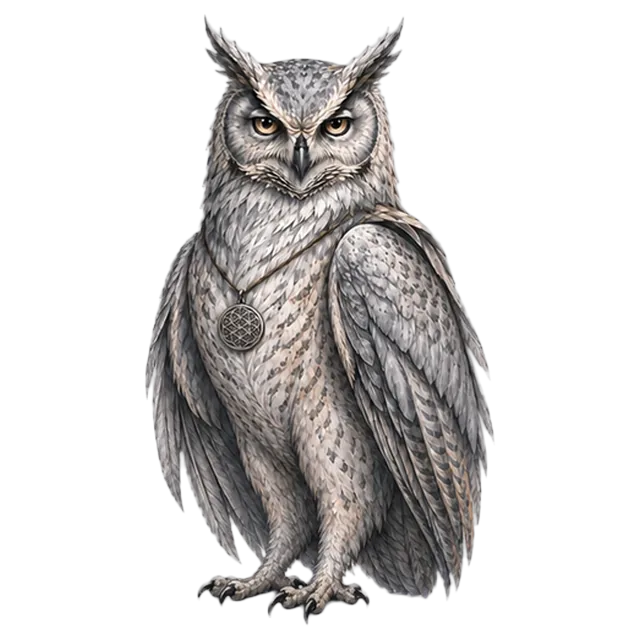
„Good answers begin with patient questions. That is how our knowledge model came about.“
Aurel
And because a single cycle day explains little on its own, sleep, mood, energy, bleeding and temperature are part of what BodySeasons puts into context.
What sits behind the recommendations
A curated knowledge model connects research with real life: cycle, age, contraception, menopause and your own observations.

„Not every source carries equally far. We look at which one really supports you.“
Viva
From specialist knowledge to everyday guidance
Guidance comes from checked research, careful weighting and a gentle translation into everyday language.
Endometriosis: what we rely on
For endometriosis, we evaluated the 2022 ESHRE guideline along with further studies and reviews. They look at how the pain shows up, how fatigue, sleep and mood relate to it, and what can bring relief in everyday life.
The note in your analysis does not replace a medical assessment. It tells you that it may be worth talking to a doctor.
What BodySeasons does with it
How we weigh sources
For us, it is not enough that a claim exists somewhere. What matters is how well it is supported.
Your body is more than a calendar date
Cycle days are useful, but they do not explain everything. BodySeasons also considers the signals you enter yourself. That applies to daily body-related guidance and to your analyses.
Hormone pattern plus real-life signal
What our analyses are built on
Our data foundation rests on the structured evaluation of peer-reviewed studies. We do not take them at face value: every source passes through our own assessment and weighting scheme before it becomes an everyday cue.
Among the largest studies and reviews we evaluated
42,684 womenNelson et al. (2023)
Fertility and Sterility, 42,684 women, age- and contraceptive-specific AMH reference values.
17,120 womenSeifer, Baker & Leader (2011)
Fertility and Sterility, 17,120 women, age-specific AMH values.
9,704 womenBauer et al. (2001)
Annals of Internal Medicine, 9,704 women, thyroid and bone health.
Long-term cohortSWAN cohort (Randolph, Sowers, Santoro et al.)
estradiol and FSH across the menopausal transition.
GuidelineESHRE endometriosis guideline (Becker et al., 2022)
Human Reproduction Open, 109 recommendations on diagnosis and treatment. The basis of our endometriosis content.
27,125 womenVennberg Karlsson et al. (2021)
Acta Obstetricia et Gynecologica Scandinavica, 27,125 women, AMH under hormonal contraception.
15,277 peopleBoucai, Hollowell & Surks (2011)
Thyroid, 15,277 people, thyroid (TSH) reference ranges.
5,419 womenKalfas, Chisari & Windgassen (2022)
European Journal of Pain, a review of 27 studies on pain, mood and quality of life in endometriosis.
Cycle observationFrank-Herrmann et al. (2007)
Human Reproduction, the Sensiplan study by the NFP working group on cycle observation.
Our value is the interpretation, not the collection
Each study is graded by quality, matched against 13 cycle profiles and 5 age groups, and only then translated into an understandable cue. That turns 474 specialist sources into a consistent picture rather than a list of citations.
Last reviewed: October 2026 · BodySeasons does not provide diagnoses and is not a substitute for medical advice.
„We do not collect what is loud. We keep what holds.“
Aurel

Openly explained without exposing the specialist model
- We do not publish the complete source list.
- We do not show internal hormone values, weightings or rule boundaries.
- We do not diagnose and do not replace medical advice.
- We still explain clearly why our guidance and analyses are not based on guesswork.
Ready to understand your body better?
Start for free and see how research, logging and everyday life come together in BodySeasons.