In brief
- Insulin sensitivity and systemic fuel utilization change measurably across your natural menstrual cycle.
- While estrogen supports swift glucose uptake before ovulation, progesterone moderately reduces cellular insulin responsiveness afterward.
- Current evidence highlights that these metabolic shifts are modest and characterized by significant individual variation.
- Consuming complex carbohydrates alongside protein and fiber stabilizes your blood sugar curves without extreme dietary restrictions.
How Insulin Sensitivity and Blood Glucose Metabolism Change Across the Cycle
You sit at your desk. The clock shows two in the afternoon, and even though you finished a balanced lunch just an hour ago, you suddenly feel drained and completely hollow. Your eyes seek the snack drawer. Perhaps you wonder in this quiet moment why your regular meal failed to provide you with steady, dependable physical energy. Many women experience this. Such noticeable shifts occur reliably in the days before menstruation begins and raise very understandable biological questions. Here the luteal phase reveals its presence, during which changing ovarian hormones measurably alter your cellular insulin sensitivity and glucose handling. It is not a lack of willpower. Instead, you are witnessing a fascinating and completely normal adaptation of your entire body to internal hormonal rhythms.
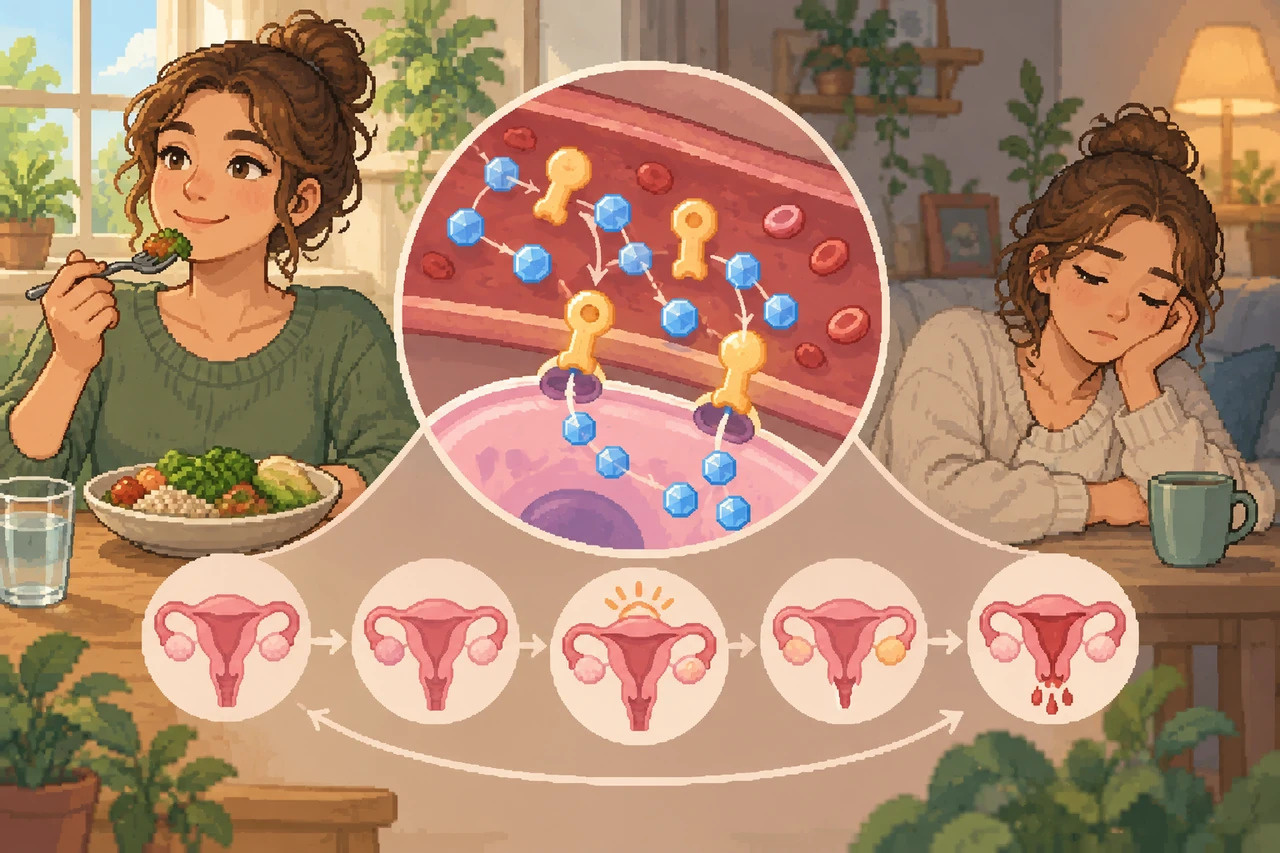
Insulin acts like a key. This vital hormone enables glucose from your bloodstream to enter skeletal muscles or the liver, where it is converted into usable energy or stored. When cellular sensitivity remains high, your system requires only small amounts for this vital transport. This responsiveness shifts regularly. Recent scientific syntheses highlight that this cellular responsiveness is by no means static throughout the month, but adapts dynamically to shifting hormone levels.1
The First Half of the Cycle: Estrogen and High Insulin Sensitivity
Your cycle begins with menstruation. During this early follicular stage leading toward ovulation, circulating concentrations of estrogen steadily climb higher in your blood. Estrogen supports the uptake of glucose into skeletal muscle and clearly improves cellular sensitivity toward your own natural insulin. Cells respond swiftly. Carbohydrate-rich meals are processed effectively during these two weeks, allowing blood sugar levels to return to baseline shortly after you eat.
Your body favors carbohydrates now. Scientific reviews indicate that your body preferentially burns glucose around ovulation to fuel your brain, active muscles, and internal organs with quick energy. You feel vibrant. Intense hunger pangs rarely strike during this window, because efficient glucose uptake supports steady stamina during both daily tasks and demanding workouts.1
The Impact of Hormones in the Luteal Phase
After ovulation, everything changes. The corpus luteum begins releasing progesterone, which prepares your entire reproductive system for a potential pregnancy. During this distinct luteal phase, the rising progesterone triggers a physiological and entirely healthy reduction in cellular insulin responsiveness. Cells demand more insulin. Your tissues now require slightly more insulin to absorb circulating blood sugar, which is not a disorder but an evolved metabolic adjustment.
At the same time, your body burns more fat. Your resting energy expenditure increases by a modest number of calories, which naturally stimulates your appetite before menstruation. Your body seeks extra fuel. If you consume rapid-acting sugars now, steep spikes followed by sharp drops may follow, creating the sudden afternoon crashes that feel so exhausting.1
Nutrition Without Dogma: Steady Energy Instead of Glucose Crashes
Avoid severe dietary restrictions. Certain wellness trends promote extreme carbohydrate elimination or rigid ketogenic protocols for these weeks, yet contemporary research offers no scientific justification for such bans. Your brain requires glucose. Instead of cutting out carbohydrates completely, you can focus on their quality and pair them thoughtfully with other macronutrients on your plate. Complex carbohydrates digest slowly. They produce a gentle rise in blood sugar and provide lasting physical stamina.
Whole grains, oats, and legumes deliver prebiotic fiber. Pairing these complex carbohydrates with quality protein sources and healthy fats slows nutrient absorption into your circulation even further. Insulin releases smoothly. Especially during the luteal phase, this balanced approach prevents sharp energy crashes and keeps food cravings comfortably at bay before your bleeding starts. You maintain steady strength.1
What Current Studies Show and Where Their Limits Lie
A recent review in Nutrients synthesizes the available scientific evidence on this topic. Observed metabolic shifts remain moderate. On average, cycle-related changes are small to modest and should never be viewed as severe metabolic dysfunction. Furthermore, the published evidence represents a qualitative synthesis rather than a pooled statistical meta-analysis. Every person is unique. Because noticeable variations exist between different women and across successive cycles, published research outlines broad biological tendencies rather than rigid universal rules.
These observations apply to healthy premenopausal women with regular menstrual cycles. Contraception alters these patterns. Women using hormonal contraceptives do not experience these natural ovarian steroid fluctuations in the same way. Similarly, these findings cannot be applied directly to individuals with polycystic ovary syndrome or diabetes, since gut microbes and immune signals also influence metabolism. Science provides guidance, not dogma.1
What You Can Take Away
Your metabolism is not a machine. It is an adaptable biological network that responds dynamically to shifting hormones. Particularly during the luteal phase, mindful habits support your energy far better than fighting your natural appetite with punishing dietary rules. Nourish your changing needs. Thoughtful meal combinations provide you with steady stamina across every single week of your monthly cycle.1
This article serves educational purposes only. It cannot replace individual medical care. If you experience severe exhaustion, persistent dizziness, or concerning blood sugar fluctuations, please consult a trusted healthcare provider for thorough clinical evaluation. Professional testing uncovers underlying hormonal or metabolic issues early and ensures personalized care. Trust your body signals.
- Estrogen improves insulin sensitivity before ovulation, enabling your muscle cells to take up glucose efficiently.1
- Progesterone slightly reduces cellular insulin responsiveness after ovulation, which represents an entirely normal evolutionary adaptation.1
- Resting energy expenditure and fat oxidation rise modestly before your period, naturally increasing your overall appetite.1
- Complex carbohydrates combined with protein and fiber smooth blood glucose curves and prevent sudden crashes.1
- Metabolic differences across phases are moderate and vary widely between individuals, making rigid diets counterproductive.1
How this article was created
AI helps us with research and drafting. Before publication, a real responsible person reviews both language versions, every claim and the related sources.
This article provides general information and supports self-observation. It is not a substitute for medical advice, diagnosis or treatment.
Sources
- An Overview of the Impact of the Menstrual Cycle on Nutrient Metabolism: An Integrative Perspective.NutrientsAccessed 24 September 2026
Reported limitations
- Metabolic differences across phases are small-to-moderate and subject to marked inter- and intra-individual heterogeneity.
- The review synthesizes qualitative integrative evidence rather than providing pooled quantitative meta-analytic effect estimates.