In brief
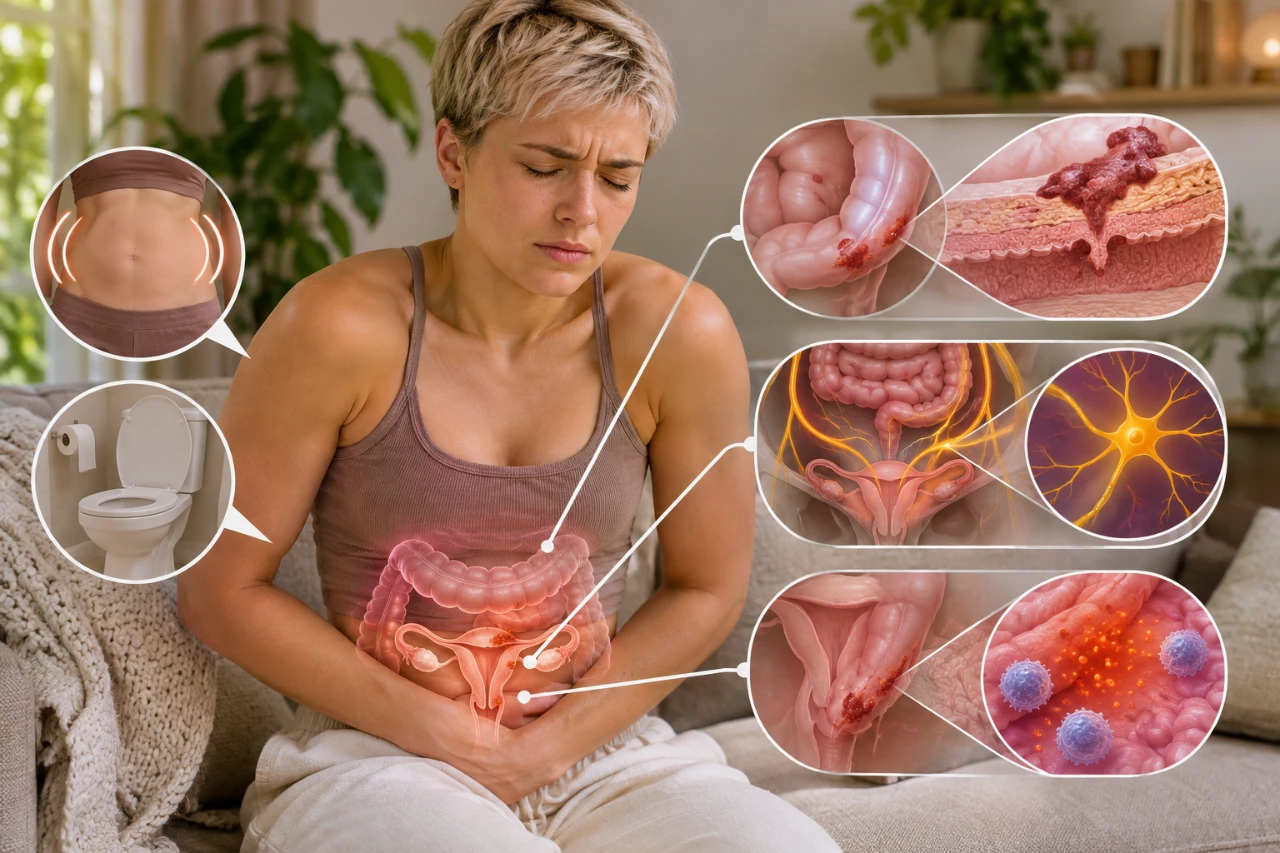
- Current scientific reviews highlight a strong biological connection between endometriosis and gastrointestinal symptoms.
- In bowel endometriosis, tissue lesions penetrate the muscular layer of the intestinal wall and irritate local nerves.
- Shared pelvic nerve pathways cause irritation in reproductive organs to cross-sensitize the digestive tract.
- Because symptoms may persist after surgery, medical experts emphasize the importance of integrated, multidisciplinary care.
How Endometriosis and Digestive Symptoms Are Linked in Current Studies
You are enjoying dinner with close friends when a sharp cramp strikes. The relaxed mood vanishes quickly. Intense belly pain suddenly builds up, forcing you to step away and rush toward the nearest restroom in distress. In these difficult moments, many people wonder whether endometriosis diarrhea and distressing stomach troubles can stem from their reproductive health. This uncertainty harms daily life. Recent scientific reviews explore this question and shed light on these pelvic connections.
Medicine once separated these organs. Doctors long treated digestive troubles and gynecological pain as two isolated conditions that had very little to do with each other. New research shows a different story. When endometrial tissue grows outside the womb, it can trigger localized inflammation that directly impairs surrounding bowel structures and nerves. Persistent pain signals can also disturb distant parts of the intestine. These findings bring much needed clarity.1, 2
Bowel Endometriosis and Tissue Infiltration
Endometriosis lesions can grow directly on the surface of the bowel. This condition is bowel endometriosis. Displaced tissue penetrates deeply into the intestinal wall and reaches the muscular layer, where it causes ongoing structural irritation and swelling. Most lesions sit near the rectum. Scientific data confirm that roughly ninety percent of intestinal deposits develop in the rectosigmoid section of the lower colon. Affected women often report intense cramps, painful bowel movements, and shifting digestion.
Symptoms involve more than growth. Inflammatory molecules released by displaced cells actively invade local nerve bundles and make the entire surrounding area far too sensitive. Scientists refer to this as neuroinvasion. These irritated nerve fibers send continuous distress signals toward the spinal cord. At the same time, localized immune changes and imbalances in gut bacteria disrupt the normal microbial balance of the intestine. This shift worsens painful bloating.1
Why Endometriosis Diarrhea and Irritable Bowel Symptoms Overlap
Not all patients have lesions. Many people suffer from severe bowel trouble even when doctors find no visible implants along their actual digestive tissue walls. Both conditions share common pain mechanisms. Researchers classify endometriosis alongside irritable bowel syndrome within a broader family of chronic overlapping pain conditions that frequently appear together. Because of this overlap, endometriosis diarrhea and pelvic cramps often occur simultaneously. The entire belly becomes sensitive.
Shared pelvic nerves explain this. Because the uterus, bladder, and bowel share common sensory pathways, neural distress signals from one organ can easily sensitize the others. Experts call this visceral cross-sensitization. Constant inflammatory signals keep spinal pain centers on high alert through what scientists classify as nociplastic pain amplification mechanisms. As a result, normal intestinal gas can trigger intense pain. Healthy tissue feels inflamed.2
Diagnostic Delays and Fragmented Care
Accurate diagnoses often take years. Because digestive symptoms mimic common stomach bugs, doctors frequently overlook deep endometriosis during standard routine pelvic examinations and checkups. Specialized imaging provides much better answers. Advanced transvaginal ultrasound and magnetic resonance scans allow clinicians to detect deep intestinal deposits with very high diagnostic accuracy. Standard tools like the ENZIAN score help map out tissue infiltration. Clear pictures guide every decision.1
Medical fields still work separately. Patients frequently bounce between different clinics, receiving fragmented care instead of a coordinated plan that addresses both pelvic and bowel symptoms. Single-focus treatments often fail. Current literature strongly urges specialists to unite gynecological knowledge with digestive care and modern pain management into one team. This multidisciplinary setup ensures that overlapping problems are caught early and treated. Patients gain much better support.2
Where the Current Research Limits Lie
Every scientific review has limits. Most available evidence comes from narrative papers that summarize existing findings rather than new large-scale clinical trials with standardized protocols. Surgical outcomes also vary widely. Reviews clearly note that gastrointestinal distress can persist even after surgeons have successfully removed visible endometrial nodules from the bowel. This shows that symptoms involve more than visible tissue growths. Recovery takes time and patience.1
Many questions remain open. While studies demonstrate clear biological links, they cannot predict exactly how symptoms will behave in each individual patient over time. Bowel symptoms alone do not confirm endometriosis. Numerous other gastrointestinal disorders trigger identical complaints, making a thorough medical evaluation essential for an accurate and safe diagnosis. Always talk with your doctor if severe stomach issues persist. Proper testing brings certainty.2
What You Can Take Away
Your pain is completely real. Modern medical research clearly confirms that pelvic organs, local nerves, and immune defenses communicate with each other during chronic inflammation. Physical changes cause your distress. Even when standard lab tests appear normal, biological mechanisms are actively shaping how your digestive tract responds each month. Avoid self-treatment and discuss your symptoms openly with your medical provider. Good support makes a difference.
Science offers helpful guidance. Understanding these connections empowers you to ask clear, informed questions during your next routine medical appointment or consultation. Digestive trouble is not unusual. Looking at your health through an interconnected lens helps doctors create a personalized strategy suited to your specific needs. Here are the core takeaways highlighted across current scientific synthesis papers.
- Bowel deposits commonly affect the rectosigmoid colon, penetrating deep into the intestinal muscular layer.1
- Localized inflammation and nerve irritation disrupt the gut microbiome and bowel function.1
- Irritable bowel syndrome and endometriosis share visceral cross-sensitization.2
- Diagnostic delays remain common, requiring close collaboration between gynecologists and digestive specialists.1, 2
- Symptoms may persist following surgery, making comprehensive medical guidance necessary.1, 2
How this article was created
AI helps us with research and drafting. Before publication, a real responsible person reviews both language versions, every claim and the related sources.
This article provides general information and supports self-observation. It is not a substitute for medical advice, diagnosis or treatment.
Sources
- Advances in bowel endometriosis: epidemiology, pathogenesis, diagnosis, treatment, and future perspectivesReproductive Biology and EndocrinologyAccessed 18 November 2026
Reported limitations
- The evidence is synthesized narratively, reflecting ongoing gaps and limited standardization in diagnostic and management strategies.
- Persistent gastrointestinal symptoms may continue even after surgical or medical management due to complex multifactorial mechanisms.
- Multimorbidity in Chronic Overlapping Pain Conditions: From Burden to Integrated Care.Journal of Clinical MedicineAccessed 18 November 2026
Reported limitations
- Mechanistic understanding of chronic overlapping pain conditions remains incomplete and primarily derived from narrative syntheses.
- Clinical awareness is frequently limited and patient care remains fragmented across separate medical disciplines.