In brief
- An analysis of 2330 women demonstrates a strong link between physical menopausal complaints, poor sleep, and depressive symptoms.
- Sleep disturbances statistically account for a substantial share of depressive mood risks, particularly following hot flashes and sweating.
- Among 549 surveyed women, perceived stress worsened psychological distress, whereas perceived social support provided a measurable buffer.
- Both cross-sectional surveys cannot prove causality and should never replace personal medical consultation when persistent symptoms occur.
Typical perimenopause symptoms and the question of underlying causes
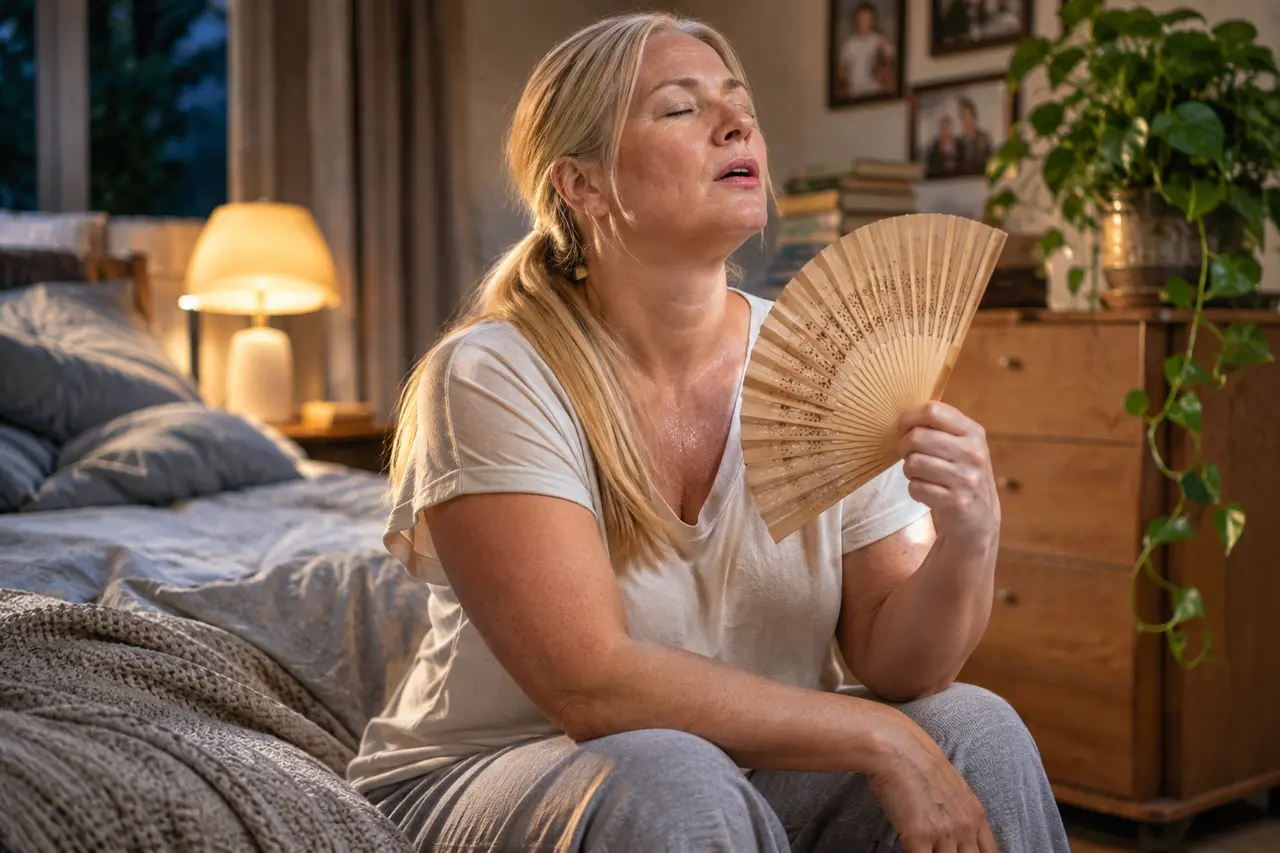
You wake up at 3 in the morning drenched in sweat. Your mind races without pause. The next day you feel exhausted and sad. Many women wonder what typical perimenopause symptoms really are. You are not alone. Your body undergoes profound hormonal changes during this life stage. Recent studies help us understand these signals without judgment or unnecessary fear. Shifting hormones, the nervous system, and daily emotions interact closely.
A large study of 2330 women examined these links closely. The team used two standard questionnaires. They measured physical discomfort with the Kupperman Menopausal Index and tracked mood with the PHQ-9. Depressive symptoms appeared in 34.0 percent of the participants with a score of 5 or more. The findings were very clear. Women with severe physical changes reported low mood far more often. Body and mind clearly influence each other.1
How hot flashes and sleep quality interact
Hot flashes and night sweats cause heavy strain for many women. The data from 2330 participants confirm this strong link. Severe physical discomfort broke nightly rest. Poor sleep, with a score above 5 on the Pittsburgh Sleep Quality Index, raised the odds of depressive symptoms by 4.48 times. The confidence interval ranged from 3.72 to 5.40. Waking up repeatedly robs your body of rest. Emotional strength then fades quickly.1
Statistical tests offered a vital explanation. These common perimenopause symptoms frequently disrupt restful sleep. Sleep quality mediated between 17.08 percent and 63.39 percent of the total link to depressive moods. This mediating effect was highest for hot flashes and night sweats. Night sweats disrupt sleep. Poor sleep then drags down your mood during the day. Restful sleep protects your emotional balance.1
Mental strain and the role of perceived stress
Daily stress also plays a major role during these years. A study of 549 Chinese women examined this link in detail. Researchers used targeted questionnaires. They measured perceived stress, psychological distress, and mental symptom severity. The pattern was unmistakable. Women who felt overwhelmed in daily life suffered far more from anxiety and inner unrest.2
The study data present clear numbers. Perceived stress directly worsened mental symptoms with an effect size of 0.493, accounting for 59.60 percent. Psychological distress also acted as a mediator. It explained 24.67 percent of the relationship with an effect size of 0.204. External demands meet a nervous system in transition. Pressure builds up easily.2
Why social support protects emotional wellbeing
The study with 549 women also brings good news. It identified a strong protective factor. Perceived social support reduced stress and emotional strain. Women with strong support managed stressful moments much better. Social support buffered the negative impact of stress by 12.21 percent with an effect size of 0.101. Connection protects the heart. Feeling alone makes daily stress worse.2
The scientists also identified a chain of effects. This specific path through stress and diminished support accounted for 3.62 percent with an effect size of 0.030. Constant stress drains emotional energy. You may quietly withdraw from friends and family. When connection fades, emotional strain grows heavier. Honest conversations help. They break this painful cycle early.2
What the studies do not show and where limits exist
We must interpret these findings with care. Both studies used a cross-sectional design. They collected information at only a single point in time. Cross-sectional data cannot prove cause and effect. Does poor sleep trigger low mood, or does low mood ruin sleep? Science cannot answer that yet. In addition, all results came from self-reported questionnaires rather than medical diagnoses.
The findings also cannot be applied to all women everywhere. The stress survey included only Chinese women in one cultural setting. Cultural norms deeply shape how we handle stress and family support. Furthermore, the sleep study combined peri- and postmenopausal women. Every person is unique. Your personal journey may look quite different from these statistical averages.1, 2
What you can take away
Current research shows how many daily factors connect. Night sweats, broken sleep, stress, and mood constantly interact. Challenging perimenopause symptoms do not have to be endured alone. Good support is available. Speak openly with your doctor if exhaustion or sadness weighs on your life. A thorough medical checkup brings clarity and personal guidance.1, 2
Small lifestyle changes offer real relief. Protect your bedtime routine and aim for restful sleep. Stay close to people who uplift you and listen. Connection builds resilience. Treat your changing body with patience, kindness, and deep respect.
- In a multicenter study of 2330 women, 34.0 percent exhibited depressive symptoms that correlated with menopausal severity.1
- Sleep quality statistically mediated up to 63.39 percent of the association between vasomotor symptoms and depressive moods.1
- In 549 surveyed women, perceived stress directly increased psychological symptom severity with a 59.60 percent contribution.2
- Perceived social support provided a valuable buffer, reducing the detrimental impact of stress by 12.21 percent.2
- Due to cross-sectional designs, causality remains unproven, making professional medical consultations essential for personal guidance.1, 2
How this article was created
AI helps us with research and drafting. Before publication, a real responsible person reviews both language versions, every claim and the related sources.
This article provides general information and supports self-observation. It is not a substitute for medical advice, diagnosis or treatment.
Sources
- Statistical mediation by sleep quality in the association between menopausal symptoms and depressive symptoms in peri- and postmenopausal women: a multicenter cross-sectional study.Frontiers in EndocrinologyAccessed 11 November 2026
Reported limitations
- The cross-sectional design precludes drawing causal inferences among menopausal symptoms, sleep disturbances, and depression.
- Outcomes were assessed solely through self-reported questionnaire instruments.
- Perceived stress and mental health in perimenopausal women: a serial mediation study of psychological distress and social support.Frontiers in PsychiatryAccessed 11 November 2026
Reported limitations
- The cross-sectional design restricts the determination of causal directions between stress perception and psychological symptoms.
- The sample is restricted to Chinese women, which may limit generalizability to other cultural settings.