In brief
- Scientific studies establish a clear link between severe menstrual symptoms and recurring absenteeism across secondary schools and universities.
- Among nursing students, research demonstrates widespread dysmenorrhea and substantial disruption to both academic lectures and clinical training.
- In secondary school settings, roughly 10 percent of menstruating adolescents miss at least 1 day of school monthly due to pain and poor resources.
- Institutional support systems remain scarce, making professional medical guidance essential whenever severe pain disrupts daily education.
How menstrual symptoms and absenteeism in education connect
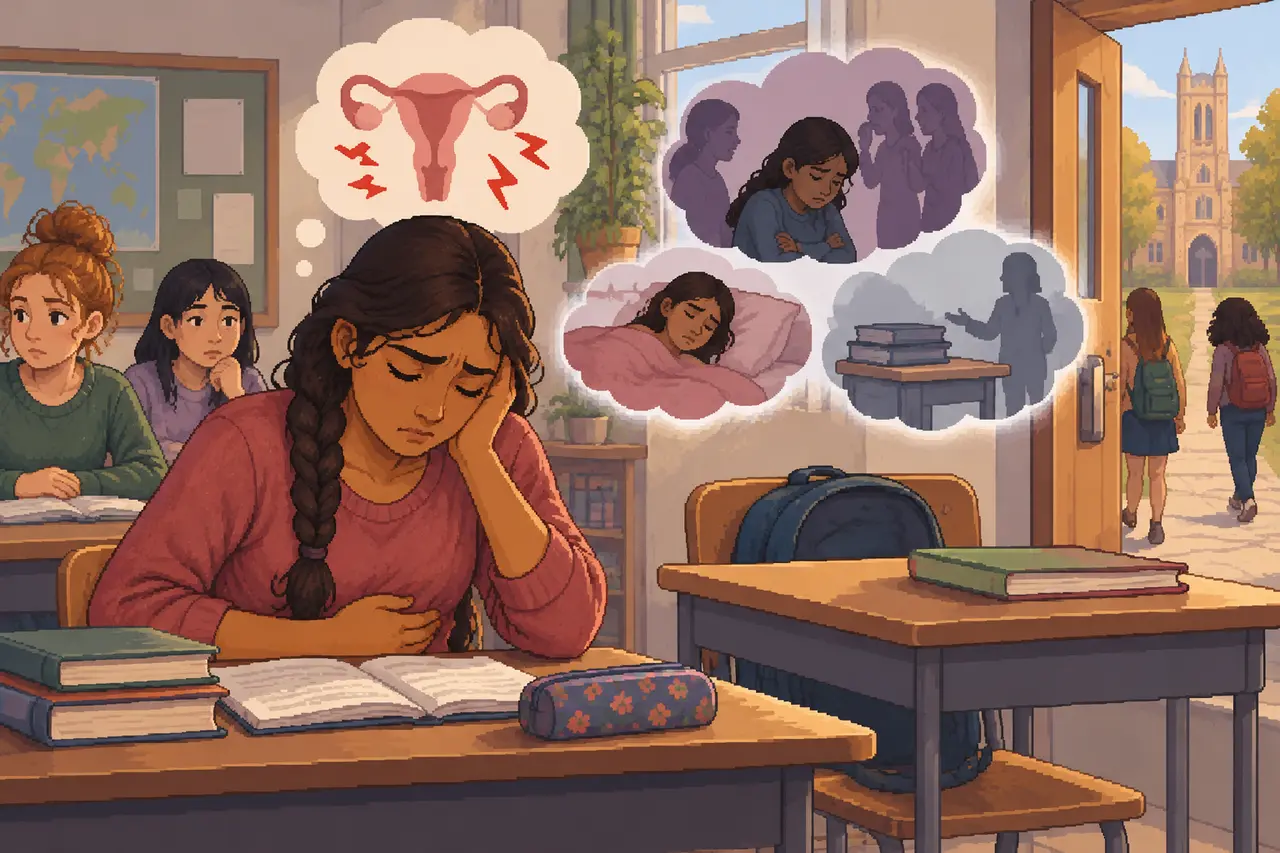
The alarm rings early on Monday. A sharp cramp cuts through your lower belly and steals your breath for a second. You sit on the edge of the bed. Your mind races toward an exam, yet your tired body simply begs for rest. Many young learners know this painful tension between duty and heavy bleeding. When studying menstruation school absenteeism, we look at precisely these difficult moments. Guilt sets in fast. Yet science shows that cycle-related absences are a very common reality for many students.
Researchers now track how period pain harms education. Missing class is never an isolated event. Large reviews show that pupils and university students face the exact same recurring barriers across many countries. Pain costs time. This is not personal weakness. Clear data help us discuss this issue openly and without shame.1
Strains in higher education: High rates among student cohorts
A major 2026 review evaluated 20 studies covering more than 5000 nursing students. Around 72 percent suffered from painful dysmenorrhea during their training. The rate is high. In addition, 62 percent struggled with noticeable symptoms before each period. The severe condition PMDD hit 21 percent of these future nurses. These numbers highlight huge physical stress in a field that combines packed lectures with exhausting clinical work.1
Affected students missed classroom lectures as well as practical hospital rotations. Pain also hurt their focus during long shifts. Most students relied on painkillers, extra rest, or dietary shifts to get through the day. They coped alone. Official university support was used by only a tiny fraction of learners. Wellness programs like yoga or exercise were almost never evaluated in the underlying studies.1
Menstruation school absenteeism: What data from schools reveal
What happens in secondary schools? A 2026 study tracked over 3300 girls across 60 secondary schools in Uganda over several months. At baseline, nearly ten percent missed at least 1 day each month due to period pain. The loss was real. In the control group, that number climbed to 11 percent over time. Girls lost around 0.3 school days each month on average. Research into menstruation school absenteeism provides clear data from secondary schools.2
Missed school was directly tied to sharp menstrual pain. Teasing and poor supplies made things much worse for many girls. Grades suffered as well. The data proved that students facing these hurdles earned lower scores on national standardized tests. Low health knowledge deepened the trouble. Physical pain, social stigma, and missing supplies work together to harm student outcomes.2
Which mechanisms drive these educational disruptions
Biological and emotional drivers reinforce each other during the school week. Cramps trigger intense pelvic pain. Nausea, headaches, and deep fatigue frequently follow. When the body must constantly manage severe physical pain, cognitive stamina during lessons naturally plummets. Mood dips drain drive. Staying home in bed often becomes the single remaining option for rest and relief.
Building conditions also play a huge role in missed school days. Without private restrooms, the constant fear of leaks and stained clothing grows fast. Around menstruation school absenteeism, poor access to pads and clean restrooms adds extra stress. The anxiety is heavy. Schools rarely offer pads or resting spaces, leaving students to manage pain with store-bought pills. When pain persists, staying home is often the only path left.1, 2
What the studies do not show and where their boundaries lie
Every study has limits. The nursing review showed statistical variance well above 80 percent across its included studies. Methods and student samples differed sharply from trial to trial. Moreover, nursing training involves physical hospital shifts that do not apply to every college major. Caution is necessary. We cannot stretch these specific numbers to all university students worldwide.1
Data from Uganda cannot be generalized to every school system. Absenteeism relied on self-reported answers from girls rather than official school registries. Many schools in that study lacked modern plumbing and basic washrooms. Context matters. Research reveals broad social patterns, but it cannot predict the exact path of any individual learner.2
What you can take away
The evidence is clear. Period pain is a real barrier to fair learning opportunities. Staying home during your period does not mean you lack drive. The challenge of menstruation school absenteeism affects many students and must not remain a taboo. Listen to your body. Respect your limits instead of feeling guilty about missing class. Honest conversations help protect your health over the long run.
Never suffer through severe cycle pain in silence. Studies describe broad populations, but they cannot replace a personal doctor visit. Seek medical help. If cramps disrupt your classes every month, talking with a doctor is the right next step. Healthcare providers can identify underlying causes and recommend useful treatments. With good support, you can pursue your education with renewed confidence.
- Cycle disorders like dysmenorrhea and PMS are common among nursing students, causing missed lectures and clinical shifts.1
- In secondary schools, roughly ten to 11 percent of girls miss at least 1 day monthly due to their period.2
- Pain, lack of pads, and teasing combine to raise the risk of missing school.1, 2
- Most students cope on their own with painkillers because schools rarely offer structured wellness aid.1
- School findings cannot be copied across all countries due to major differences in sanitation.2
How this article was created
AI helps us with research and drafting. Before publication, a real responsible person reviews both language versions, every claim and the related sources.
This article provides general information and supports self-observation. It is not a substitute for medical advice, diagnosis or treatment.
Sources
- Prevalence of premenstrual syndrome, premenstrual dysphoric disorder, and dysmenorrhea in nursing students: a systematic review, meta-analysis, and evidence-based recommendations.Frontiers in Global Women's HealthAccessed 4 November 2026
Reported limitations
- The included studies exhibited substantial statistical heterogeneity with an I-squared value exceeding 80%.
- The findings were restricted to nursing students and may not fully generalize to all academic disciplines.
- Associations of menstrual health with school absenteeism and examination performance among Ugandan secondary school students: A prospective study.PLOS OneAccessed 4 November 2026
Reported limitations
- School absenteeism was assessed using self-reported measures rather than institutional attendance records.
- The study was conducted in a specific educational context in Uganda, which may limit generalizability to settings with different infrastructure.