In brief
- A 2026 critical review highlights statistical associations between artificial light at night and irregular or extended menstrual cycles.
- Nighttime illumination disrupts human circadian rhythms and may thereby alter reproductive hormone concentrations in women.
- Key biological mechanisms are predominantly derived from animal models and cannot be transferred directly to humans without caution.
- Tiered nursing interventions emphasizing health education, lighting management, and lifestyle adaptations offer constructive guidance.
Nighttime Light and Menstrual Health in Modern Research
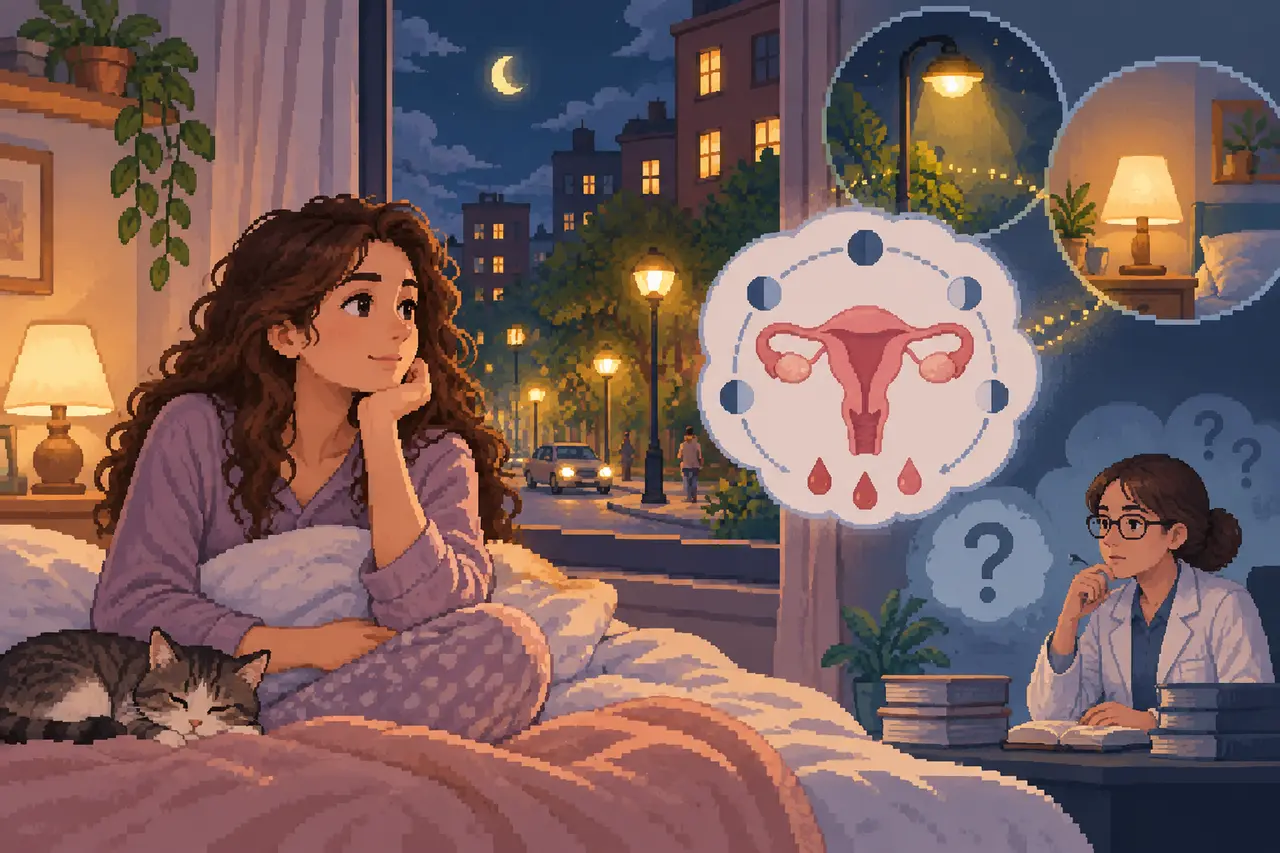
A streetlamp shines right into your bedroom late at night. Your clock glows blue on the table while you check your phone. The room stays bright. Many women know this late glow. Many women wonder how light at night menstrual cycle changes might affect daily health. This concern is real. Shift work and bright city streets have pushed true dark away from our nights. Some women note uneven cycles. Others worry about their monthly flow.
A major review from 2026 brings the global evidence together. The authors checked studies on night shift staff and city dwellers. Night turns into day. The researchers wanted to see how artificial lighting acts on the internal clocks of the body. Which light factors disrupt hormone paths? That is the core question. The paper offers helpful points for clinical care, but it also sounds clear notes of caution. Strong doubts remain.1
Light at Night Menstrual Cycle Patterns and Hormones
The reviewed data show a clear trend. Bright light at night disrupts natural body clocks. Studies exploring light at night menstrual cycle patterns frequently note altered hormone levels. Women with high night exposure had irregular cycles far more often than women who slept in dark rooms. Cycle gaps also grew longer. Hormone levels changed. Many women feel worried. They seek clear answers.
Still, we must stay cautious with the facts. These studies reveal statistical links, but they do not prove that light directly causes cycle trouble. Night work brings many other strains. Sleep loss, heavy stress, and late meals all burden the body at the same time. Each factor plays a part. Observational studies cannot easily separate these mixed influences. The results describe broad group trends. Do not fear the worst. Your body is unique.1
Biological Mechanisms: What Animal Studies Reveal
The research team examined the physical traits of light. Brightness, color spectrum, and total exposure time all make a difference. Blue light cuts deep. It hits central clock cells in the brain very fast and impairs normal night signals that govern rest. Hormone pulses falter. In theory, this disturbance can upset signals traveling to the ovaries. Scientists view this path as one possible answer for shifting hormone levels.
Yet this is where we meet a major scientific hurdle. Most detailed biological pathways come from animal tests. Mice and rats are nocturnal animals. Their hormone systems work in very different ways than female human bodies. Because of this gap, findings from rodents cannot be applied directly to women. The biology does not match. How night light shapes human ovaries remains an open question for future trials. We need more data.1
Actionable Strategies from Nursing Research
Beyond cell biology, the review offers practical steps from nursing science. The authors outline a tiered model to help people cope in daily life. Education comes first. Women should learn how steady sleep and wake times support the body. Clear knowledge brings confidence. When you understand your surroundings, you can make targeted adjustments and feel far less helpless. Knowledge gives you power.
Later tiers focus on bedroom lighting and personal evening habits. Dark rooms help sleep. Calming routines before bed also make it much easier to unwind after long work hours. For shift nurses, these gentle adjustments serve as practical tools on tough days. Still, they are no magic cure. Gentle steps cannot replace a medical visit if you face severe pain or lasting cycle troubles. Check recurring issues with a doctor.1
Where Scientific Research Reaches Its Current Limits
Anyone studying light at night menstrual cycle research should note the study limits. Many past papers relied on retrospective surveys. Recall bias creeps in fast. People rarely recall their exact night habits from years before. Such snapshot data cannot prove what came first. That is not enough. Researchers now demand strong prospective studies that track healthy women over many months. Solid proof takes time.
In addition, shift work results do not apply cleanly to every household. Years of night duty place extreme physical stress on the body. Looking at a phone screen for a few minutes in bed is not the same thing. Blanket screen bans make little sense. That goes too far. Furthermore, a pitch-black bedroom cannot guarantee a flawless cycle free from every problem. Many factors shape your health.1
What You Can Take Away
Science is just beginning to map this link. You do not need to panic or board up your bedroom windows. Stay calm and mindful. Mindful choices around evening light offer a sensible, easy step for your personal wellness. Dimming bulbs before bedtime gently supports your internal clock. Give yourself time. Rest takes patience.1
Listen closely to your own body. Light is just one tile in a much larger mosaic. Stress, nutrition, and personal health conditions often carry far greater weight for your monthly cycle. If you face severe pain or lasting irregularities, schedule an appointment with a gynecologist. Expert medical care gives clarity.
- Studies reveal statistical links between night light and cycle shifts, but direct cause remains unproven.1
- Biological pathways rely largely on animal tests and cannot be mapped straight to women.1
- Light strength, color spectrum, and total exposure hours seem to be the primary active factors.1
- Nursing experts recommend tiered steps built on clear education, light control, and evening routines.1
- Strict screen bans are not justified, but lasting cycle issues always call for proper medical advice.1
How this article was created
AI helps us with research and drafting. Before publication, a real responsible person reviews both language versions, every claim and the related sources.
This article provides general information and supports self-observation. It is not a substitute for medical advice, diagnosis or treatment.
Sources
- From nighttime light exposure to menstrual health: a critical review of evidence, mechanisms, and nursing interventions.Frontiers in Reproductive HealthAccessed 15 October 2026
Reported limitations
- Mechanisms linking light exposure parameters to endocrine alterations are predominantly derived from animal models and must be extrapolated to humans with caution.
- The epidemiological evidence varies in strength depending on study design and requires further prospective research.