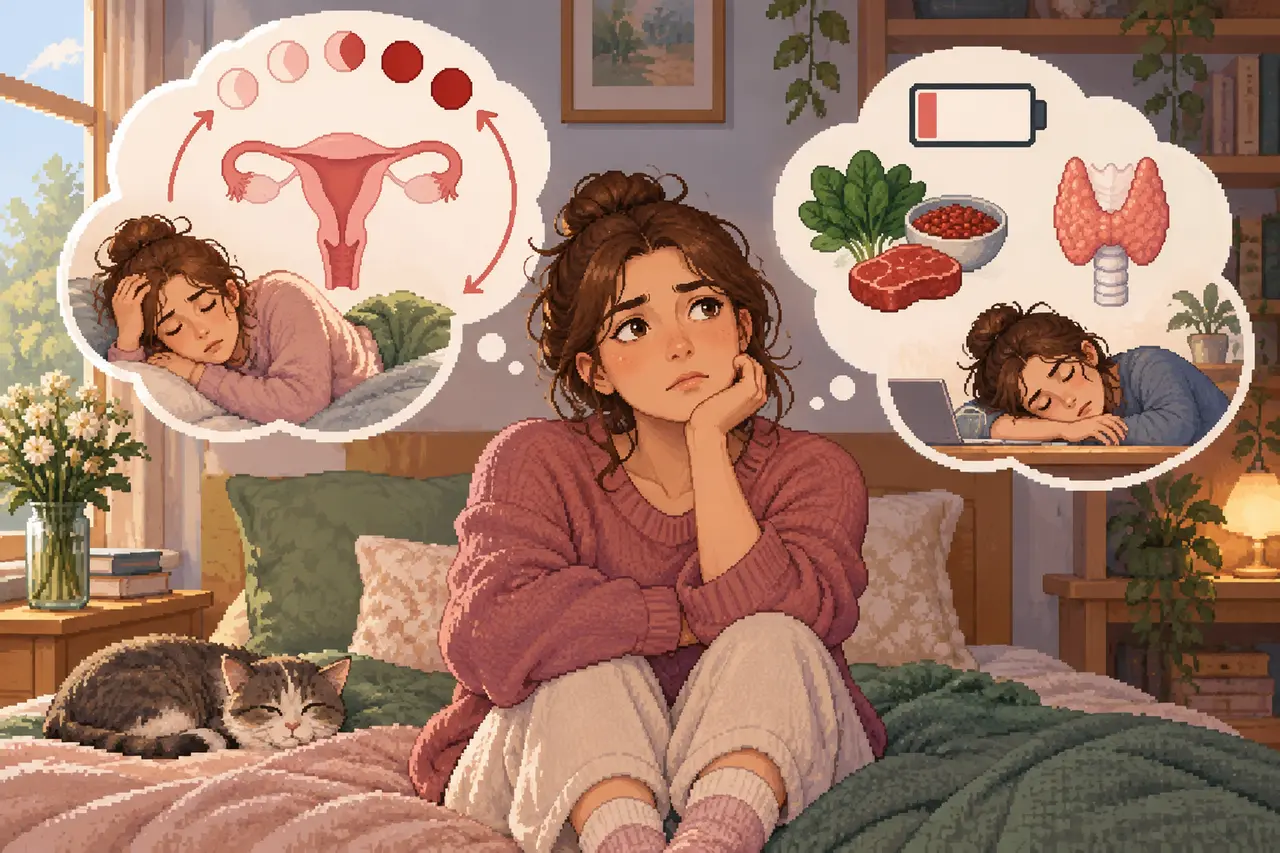
In brief
- Cycle-related tiredness tends to peak in the luteal phase and eases naturally once your period begins.
- Persistent exhaustion lingers regardless of cycle days and leaves you feeling drained even after a long night of sleep.
- When rest does not restore your energy, a simple check of iron levels, thyroid markers, or everyday stress can offer peace of mind.
Fatigue before period or real exhaustion: Listening to your body
Outside, soft October light fills the room. You sit quietly with a warm cup of tea, yet an unexpected heaviness creeps through your limbs, making even ordinary afternoon tasks feel like an exhausting climb. Your day was not especially busy. Still, every simple chore now demands an enormous amount of willpower, leaving you to wonder whether this recurrent fatigue before period is just hormonal or a deeper kind of exhaustion. The line between healthy cyclic rest and serious depletion often blurs. Looking closely at your daily signals brings welcome clarity.
Feeling confused is completely natural. During the second half of your cycle, subtle hormonal shifts demand substantial metabolic energy, which naturally increases your craving for nourishing meals, quiet evenings, and extra sleep. Your body is working hard. Yet when waking up feels heavy day after day, it is easy to worry that you have pushed past your healthy limits.
The key difference rarely comes down to how heavy a single afternoon feels, but rather how consistently that heaviness follows you across the calendar month. Cycle-related fatigue follows a clear rhythm. It usually releases its grip once bleeding starts. True exhaustion behaves like a persistent fog, clinging to your daily life no matter which week of the calendar is currently open.
How fatigue before period differs from deep exhaustion
Hormones shift before your period. This shift alters your metabolism and creates a clear physical demand for warmth, steady fuel, and extra rest. Premenstrual sluggishness typically appears 4 to 7 days before menstruation begins and eases noticeably by the second day of your flow. Clarity soon returns. You feel your normal drive return as your body enters a fresh cycle.
True exhaustion acts differently. It ignores the monthly rhythm of your cycle and refuses to lift, even after you spend an entire quiet weekend resting on the couch. Sleep brings little relief. You wake up after 8 hours feeling entirely depleted, turning routine tasks like doing the dishes or grocery shopping into overwhelming challenges.
Do not ignore chronic depletion. When this heavy weariness persists for weeks on end, underlying medical factors often play a central role that deserves gentle attention. Depleted iron stores or sluggish thyroid function can sap your vitality just as thoroughly as prolonged professional burnout or chronic psychological stress. A routine blood test helps. Your doctor can quickly check your nutrient stores and rule out deeper issues.
A simple look at your monthly calendar
Imagine keeping a small notebook by your bed for the next 2 months, or getting started with BodySeasons. Every evening, you note down your energy levels and your cycle day in just 2 short words. Soon, you will spot reliable patterns that take away the agonizing uncertainty.
Notice the onset of bleeding. If your heavy mental fog lifts after 1 or 2 days of menstruation, the cause was almost certainly predictable fatigue before period. That is valuable reassurance. Conversely, if you remain thoroughly exhausted during the follicular phase, your body is signaling a genuine need for medical support and restorative rest.
Self-observation is not self-optimization. Tracking your days simply grants you permission to honor your slower luteal rhythm without feeling guilty for taking things gently. You learn your personal baseline. Most importantly, it gives you the grounded confidence to consult a physician whenever your body signals that its reserves are truly empty.
Four small steps for clarity this week
- Record your energy score from 1 to 5 nightly for 3 cycles.
- Take 30 screen-free minutes of quiet rest each evening during the 5 days before your period starts.
- Notice whether your energy returns on cycle day 2 or 3.
- Schedule a routine blood panel with your doctor if unrelenting exhaustion continues without relief across every phase of your month.
Clear head: move tasks out of your mind
The free Clear Head list is not a normal task list. It gives everything circling in your mind a place. You can then sort what matters, what can wait and where you may want support.
- Write everything down first without judging it.
- Move important entries to the top and focus only on the next step.
- Let lower items wait or remove them when they no longer matter.
- Use the sorted overview in a conversation when you want to share tasks or ask for help.
How this article was created
AI helps us with research and drafting. Before publication, a real responsible person reviews both language versions, every claim and the related sources.
This article provides general information and supports self-observation. It is not a substitute for medical advice, diagnosis or treatment.