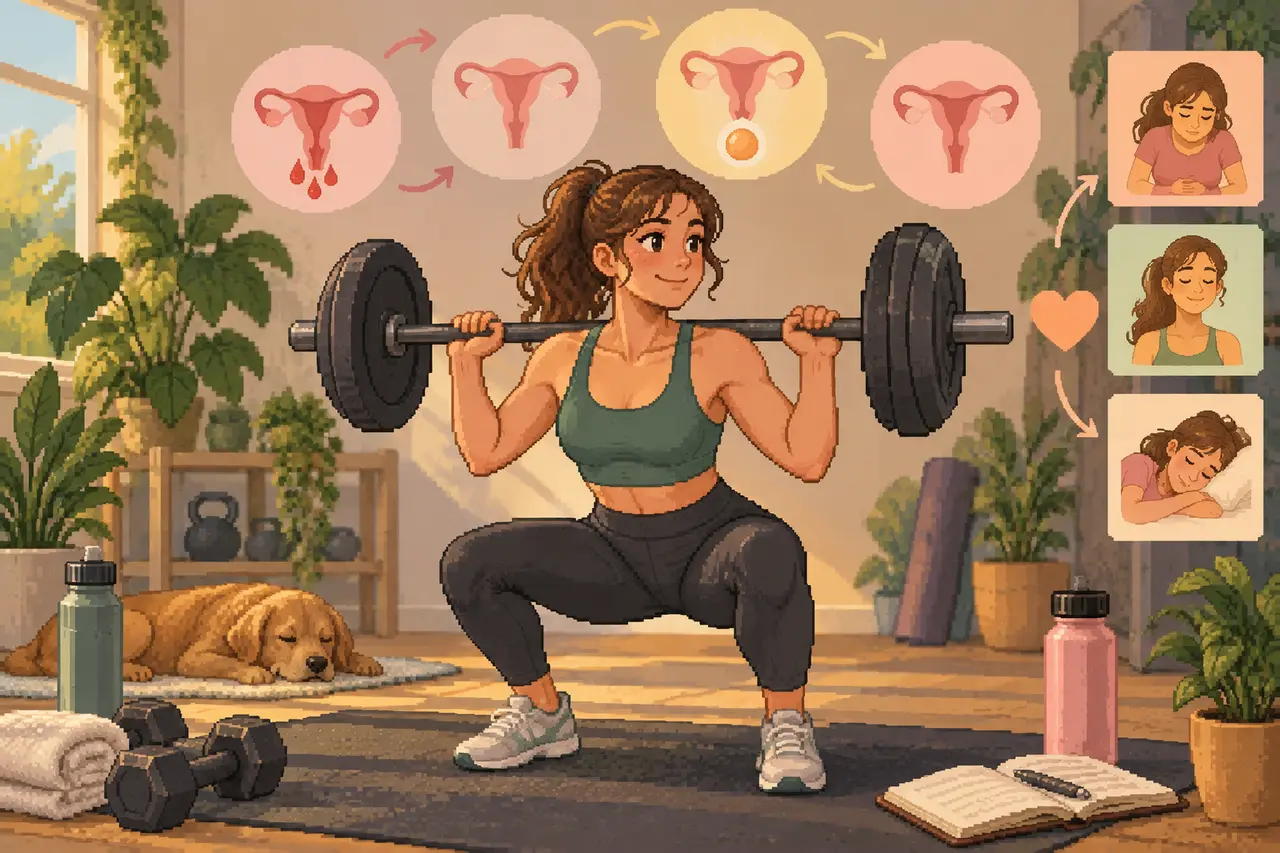
In brief
- Current scientific reviews reveal that strength differences across menstrual cycle phases are generally small and inconsistent.
- There is no strong evidence showing that rigid cycle-based workout plans produce superior muscle growth.
- Everyday training capacity is driven primarily by individual symptoms like fatigue or pain rather than theoretical hormones.
- Consistent training combined with supportive nutrition and mindful listening to your body yields the best long-term results.
What do meta-analyses say about cycle-based strength training?
You stand in the gym before the weights. Which workout matches your body today? Online feeds are full of rigid workout plans for every cycle day. Many active women wonder whether exercise during your period requires special rules. This creates confusion. Perhaps you feel abdominal tightness today or your legs simply feel heavier than usual after a busy workday. Listen to your body. Rigid rules from social media often create needless pressure.
Scientific reviews offer a clear answer. Strength differences across menstrual phases are tiny and inconsistent. Women do not automatically build more muscle during specific hormonal phases. Your body is not a machine. While hormones fluctuate naturally every month, the idea of fixed high-performance windows belongs entirely to modern fitness mythology. Stay calm.1
The cycle phase myth: What hormones truly do
Hormones like estradiol and progesterone regulate many cellular processes. They influence your metabolism and ligaments. That is completely normal. Yet these subtle mechanisms rarely cause measurable drops in strength or automatic barbell records in the gym. Actual strength levels shift very little across the month. Your body balances these slight hormonal changes quietly on its own. Do not worry.
In elite competitive sports, a single percent can decide an Olympic medal. Dedicated coaches track every minute biological cue. For recreational fitness, this level of precision simply does not matter. Sound sleep, balanced meals, and regular progressive overload drive your muscular gains far more reliably. Basics bring results. Focusing too much on cycle phases often distracts from the core habits that truly build strength. Keep it simple.1
Exercise during your period: Symptoms matter more than phases
Real symptoms shape your daily workouts far more than a calendar date. Cramps, fatigue, or poor sleep clearly reduce your training tolerance on certain days. When you feel great, you can lift heavy weights with confidence. Tailoring exercise during your period to your actual symptoms brings the best outcome. Your physical feelings are your best guide. Pay close attention. No generic online program understands your personal body as well as you do. Trust yourself.
Many active women use hormonal birth control like the pill. This suppresses the natural monthly cycle. Research shows no consistent impact of contraceptives on overall strength or muscle hypertrophy. There are no clear differences regarding injury risk or fat loss. Every woman responds uniquely to these medications. Responses vary widely. Your personal wellbeing remains the only meaningful compass for your training. You are in control.1
Nutrition and training consistency as true success drivers
Alongside symptom awareness, quality nutrition acts as a powerful lever for muscle growth. Monthly hormonal shifts can alter your daily appetite. Supporting exercise during your period with balanced nutrition helps maintain steady energy. Eating enough protein and complex carbohydrates reliably speeds up muscular repair. Eat when hungry. When you respond flexibly to your appetite, you supply your muscles with steady fuel for challenging workouts. Simple nutritional habits beat rigid phase-based diet rules every time. Keep things easy.
Long-term muscle growth relies above all on regular training over months. Your muscles need consistent mechanical tension and clean exercise technique. Do not skip sessions just because an app says a phase is unfavorable. Gentle movement can even soothe pelvic cramps. It stimulates blood flow. Showing up regularly outperforms theoretical workout philosophies every single week. Consistency wins. Hard work pays off.1
What the studies do not show and where limits lie
Reading scientific research requires an honest look at its limits. Current reviews often summarize existing papers rather than pooling raw numerical data into meta-analyses. Studies also show major differences in how menstrual phases are identified. Researchers often count calendar days instead of checking blood hormone levels directly. This causes errors. Such methodological flaws make universal training rules for individual lifters very difficult to justify. Healthy skepticism is wise.
Most studies only examined healthy women with regular menstrual cycles. Women with irregular periods or PCOS were rarely included. These findings cannot apply to everyone automatically. Scientific studies describe averages, but they cannot predict your personal response today. If you experience severe pain, consult a medical doctor. Safety comes first. Good science provides helpful general guidance, but it never replaces individualized clinical care. Take care of yourself.1
What you can take away
Scientific evidence relieves the pressure to match training with monthly hormonal shifts. Neither muscle building nor strength gains require complicated cycle plans. Your body fluctuates naturally from day to day. That is completely fine. Real progress comes from training regularly with dedication and joy over many consecutive months. In the end, exercise during your period should be guided by body awareness rather than rigid charts. Have confidence. Be proud of yourself.
Listen closely to your body during workouts. When you feel powerful, lift heavy weights. If you feel tired or crampy, reduce the load without guilt. Rest is valuable. A compassionate training approach prevents frustration and protects your long-term athletic progress in the gym. Your body knows best what kind of workout fits you today. Enjoy the process. Keep moving forward.1
- Strength differences across menstrual phases are tiny and inconsistent, making rigid phase plans unnecessary.1
- Real symptoms like fatigue and pain guide your training capacity far better than a calendar.1
- Consistency and progressive overload form the true foundation of muscle growth and strength.1
- Eating enough protein and carbohydrates supports recovery much better than phase-based dieting.1
- If you experience severe or lingering pain, consulting a physician is always the right choice.
How this article was created
AI helps us with research and drafting. Before publication, a real responsible person reviews both language versions, every claim and the related sources.
This article provides general information and supports self-observation. It is not a substitute for medical advice, diagnosis or treatment.
Sources
- Menstrual Cycle and Hormonal Contraceptives in Female Athletes: Should Symptoms and Nutrition Matter More than Cycle Phase? A Narrative Review.NutrientsAccessed 30 September 2026
Reported limitations
- The review is based on a non-systematic literature search rather than a formal quantitative meta-analysis.
- The underlying literature exhibits substantial methodological heterogeneity in menstrual cycle phase classification and verification.