In brief
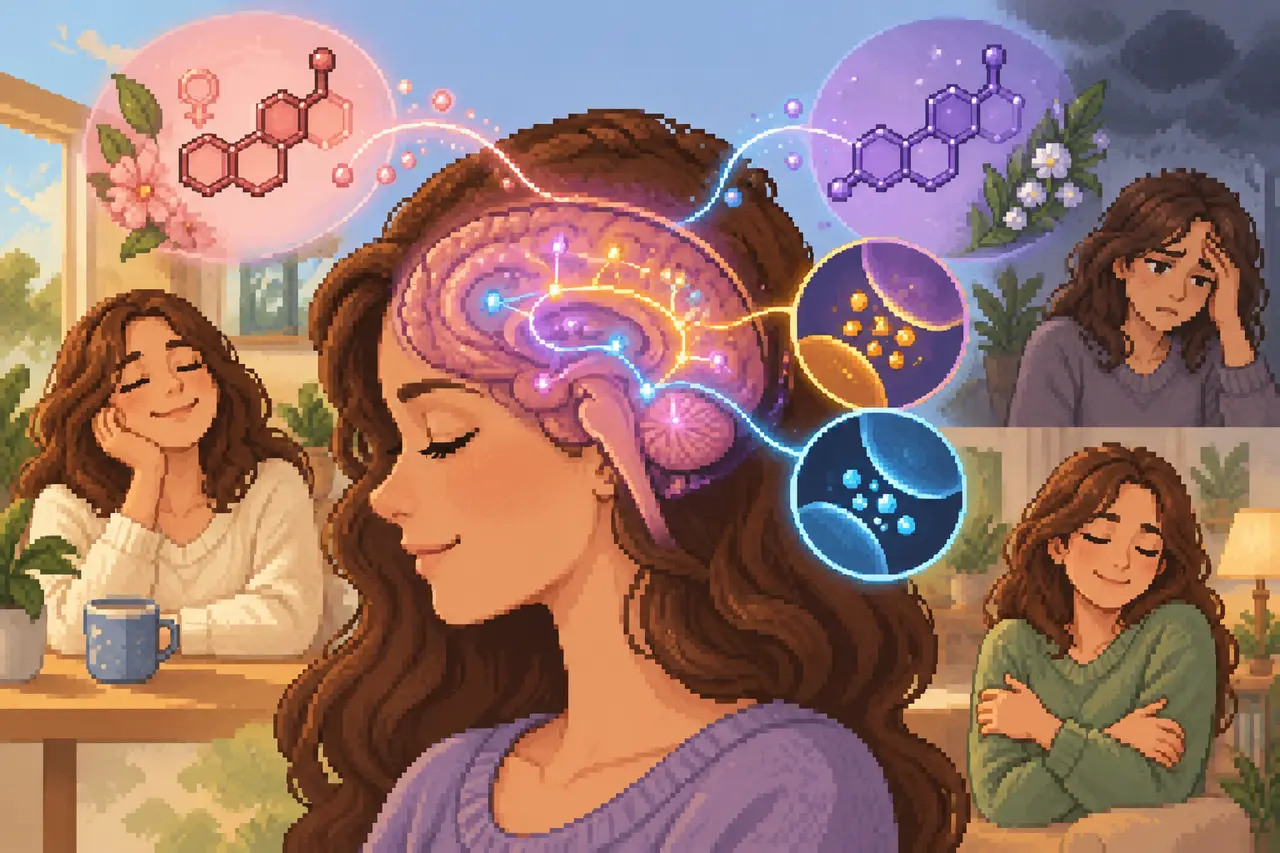
- Estrogen and progesterone modulate key neurotransmitter systems including serotonin, dopamine, and GABA directly within the brain.
- Premenstrual mood symptoms arise primarily from altered central sensitivity to physiological hormonal fluctuations rather than abnormal absolute blood concentrations.
- Neuroimaging evidence demonstrates heightened reactivity in the amygdala and insula alongside attenuated prefrontal top-down control during the luteal phase.
- Psychosocial stressors and everyday life circumstances substantially amplify this underlying neurobiological vulnerability.
What Estrogen and Progesterone Do in the Brain and to Our Mood
You are standing in the kitchen early in the morning, making coffee. Suddenly, the full mug crashes to the floor. On some days, you simply wipe up the mess. But just before your period, your throat tightens, and a wave of anger or sadness washes over you. Many women wonder how hormones, the menstrual cycle, and mood interact in the brain. The answer lies in the brain's neural pathways, where chemical messengers shape our feelings every day, guided largely by female hormones.
Estrogen and progesterone do not stay inside the reproductive system. They cross the blood-brain barrier. There, they guide vital regulatory networks across your central nervous system each day. An extensive review reveals a crucial truth. Premenstrual symptoms stem from altered brain sensitivity to normal hormonal fluctuations rather than abnormal circulating quantities in the blood. Blood levels look normal. The brain simply reacts with heightened sensitivity. It adapts constantly.1
Estrogen, Serotonin, and Dopamine: How Chemical Messengers Work in the Brain
Estrogen acts in the brain like a natural boost for your well-being. It noticeably ramps up the messenger chemical serotonin while slowing its rapid breakdown in the nervous system. As a result, more serotonin stays active in the brain, fostering inner calm and a good mood. Estrogen also boosts dopamine, bringing motivation and fresh energy for the day. This interplay between hormones, your cycle, and your mood unfolds right here in the brain. That is why many women feel alert and strong during the first half of their cycle.
Estrogen drops after ovulation. Brain scans tell a striking story. Frontal control centers show reduced activity during this dip. The dorsolateral prefrontal cortex usually dampens distress. When this cortical brake weakens under cyclical stress, acute feelings of frustration, fear, and deep sorrow break through with sudden force. The buffer fades.2
Progesterone, GABA Receptors, and Emotional Brain Networks
Progesterone leads the luteal phase. Its breakdown products bind directly to GABA receptors. These receptors form the primary inhibitory network of the nervous system. In many people, this action produces gentle relaxation like a soothing balm. Yet some brains react differently. Instead of restful peace, sensitive individuals experience paradoxical irritability, severe restlessness, and unprovoked tension. Receptors misfire.1
Brain scans highlight this response. The amygdala acts as an alarm hub. In people with premenstrual dysphoric disorder, this alarm hub fires with exaggerated intensity during the luteal window while higher cortical regulation falters. Cortical connections weaken. Feelings erupt without a shield. Balance is lost.2
Why Daily Life and Stress Matter
Biology is not alone. Daily life plays a massive role. The connection between hormones cycle mood and daily stress is remarkably strong. Women with PMDD carry normal hormone levels in their blood. Their endocrine cycles stay healthy. However, heavy job pressure, relationship friction, and chronic sleep debt collide with a temporarily vulnerable brain. Context matters deeply.1
Neuroimaging confirms this interplay. Distributed brain networks reorganize across the luteal phase. The salience network treats minor cues as real threats. Meanwhile, the executive network lacks the bandwidth to soothe rising tension under pressure. No single brain region is broken. Whole circuits shift. Stress and biology amplify each other.2
Limits of Current Research: What Studies Do Not Show
Current science has real limits. Data on adolescent girls remains remarkably sparse. Pubertal changes blur together with cyclical mood shifts during teenage years. Underlying depression also shares similar features. We cannot generalize adult findings to every young person.1
Brain imaging leaves questions open. The main systematic review evaluated datasets from nearly 600 participants. About 40 percent of individuals with PMDD do not experience symptom relief from selective serotonin reuptake inhibitors. Brain scans offer captivating collective snapshots. Yet they cannot provide definitive answers for every individual patient during a regular clinic visit.2
What You Can Take Away
Your feelings are real. Your brain simply shows heightened sensitivity to natural steroid shifts. Before your period, neural circuits process daily events through a sensitive lens. Understanding how hormones cycle mood can help you find peace with your body. You are not broken. Science offers validation.1
Track your cycle. Plan lighter schedules during sensitive days whenever possible. Build quiet pockets of rest into your regular weekly routine. This article offers helpful scientific context, but it never replaces personalized medical care. If severe mood shifts hurt your quality of life, seek guidance from a qualified doctor.
- Estrogen supports serotonin and dopamine in the brain, lifting mood and daily focus.1, 2
- Progesterone targets GABA receptors, which can paradoxically trigger irritability and tension in sensitive brains.1
- Brain scans show heightened amygdala reactivity alongside reduced prefrontal control before menstruation.2
- Premenstrual symptoms stem from heightened neural sensitivity, not abnormal hormone blood levels.1
- Because brain networks are complex, a thoughtful doctor visit is best for severe distress.1, 2
How this article was created
AI helps us with research and drafting. Before publication, a real responsible person reviews both language versions, every claim and the related sources.
This article provides general information and supports self-observation. It is not a substitute for medical advice, diagnosis or treatment.
Sources
- Premenstrual Disorders in Adolescents: An Interdisciplinary Perspective.Journal of Clinical MedicineAccessed 7 October 2026
Reported limitations
- Adolescent-specific empirical evidence remains limited.
- Diagnostic assessment is complicated by symptom overlap with normal pubertal transitions and psychiatric disorders.
- Functional MRI evidence of brain alterations in premenstrual dysphoric disorder: a systematic review.Frontiers in PsychiatryAccessed 7 October 2026
Reported limitations
- The underlying pathophysiology remains incompletely understood.
- Identified neural alterations implicate widespread, complex functional networks rather than a single localized deficit.