In brief
- Missing your menstrual period during sports training is never a fitness achievement, but a serious systemic alarm signal.
- A chronic imbalance between dietary energy intake and exercise expenditure suppresses vital central reproductive hormones.
- Prolonged estrogen deficiency caused by energy deficits measurably impairs bone density and significantly increases stress fracture risk.
- Menstrual cycle disruptions demand multidisciplinary medical evaluation to restore harmony between nutritional intake and athletic training.
How Intense Endurance Training Affects Your Menstrual Cycle
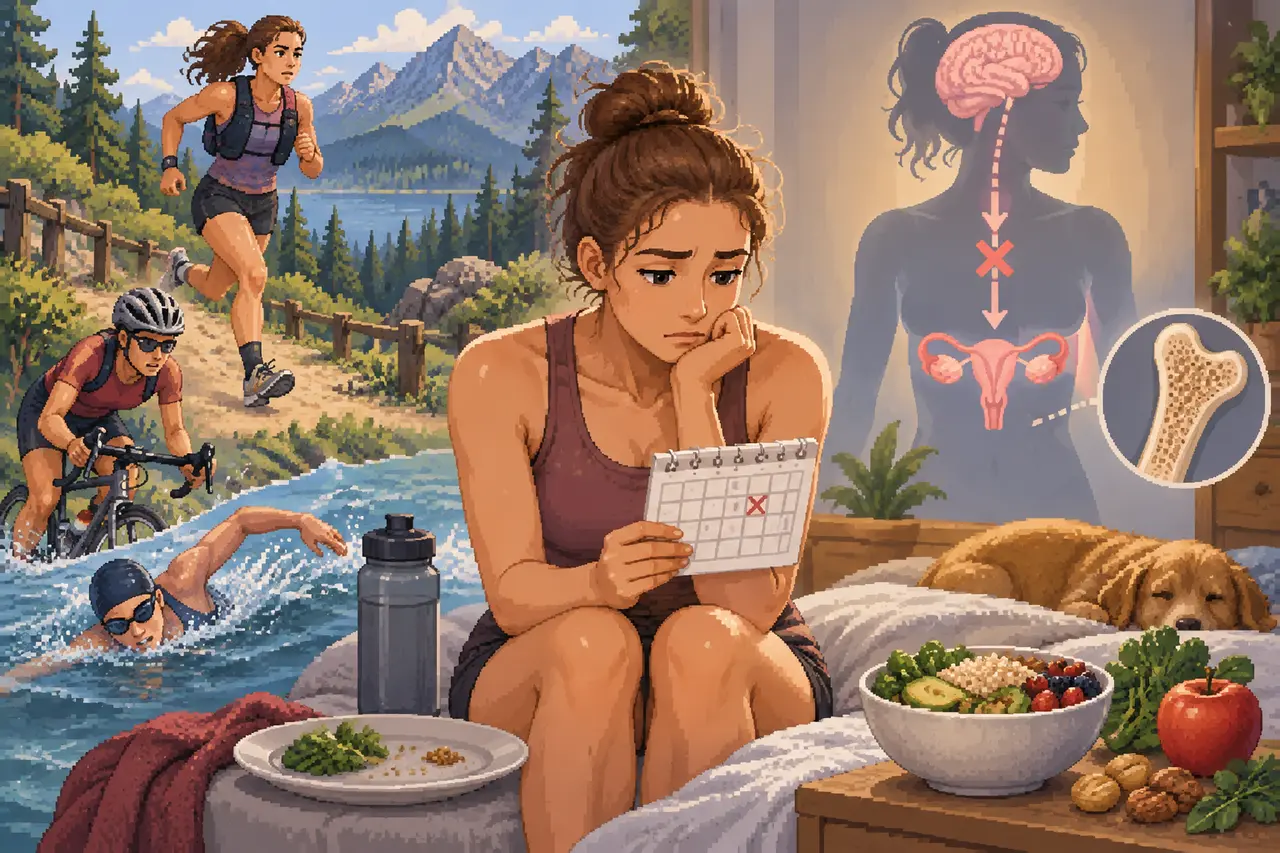
You lace up your running shoes at dawn for a long run in the woods. The air is cold. Your training plan demands hard work. Yet looking at your calendar reveals a worrying change. Your period has been missing for two full months now. You feel fit. Many active women see a missed period as a sign of athletic success. That is a mistake. In truth, your body is hitting the brakes, often due to relative energy deficiency in sport. When training burns far more energy than you eat, your system saves every calorie for survival.
A missing period is never a trophy. Your hormones react quickly to any gap between your daily food intake and your workout energy cost. Reviews make this very clear. Under low fuel, your body treats reproduction as a luxury. It shuts down signals between the brain and ovaries. Levels of key hormones drop fast. Missing cycles always require medical care to protect your bones and your future health. Listen to your body. Act early.2, 3
How Widespread Energy Deficits Are in Sports
A Spanish study from 2025 tested this problem in 1154 active women aged 15 to 45 across 78 sports disciplines. The findings were striking. About 40 percent of the athletes showed high risk for the female athlete triad. Also, 24.3 percent had signs of mild eating issues, while 7.3 percent showed risk for clinical eating disorders. This is not rare. Many recreational athletes are affected.1
The research found a clear link between low energy and cycle problems. Athletes with lower food fuel had far more missed periods. Higher energy gaps matched with worse cycle symptoms. Scores for disordered eating also tied closely to body weight and body mass index. Numbers do not lie. Sports clubs need simple checks to spot at-risk women early and offer real support.1
Understanding relative energy deficiency in sport
What happens inside your body when food intake stays too low? Your brain senses the deficit right away. When hard training meets poor nutrition, the brain slows the release of key messenger hormones, which causes estrogen levels to collapse. Doctors call this health pattern relative energy deficiency in sport. Without steady hormonal cues, the ovaries cannot mature an egg. Your monthly bleeding stops. Energy is gone.
This hormonal drop affects your entire metabolism. Medical reviews note that thyroid hormones drop as the stress hormone cortisol rises. Other metabolic signals like leptin fall below normal ranges as well. Your resting metabolic rate slows down. The body switches to survival mode. Muscles cannot rebuild well after tough workouts because tissues lack the fuel to repair normal daily damage. Fatigue sets in. Rest is vital.2, 3
Consequences for Bone Health and Long-Term Resilience
The biggest danger of period loss involves your bones. Estrogen shields your skeleton by slowing down normal bone breakdown each day. When this shield is gone, bone mineral density drops fast. Bones become brittle. Athletes facing this deficit suffer far more painful stress fractures during regular workouts. During youth and early adulthood, bone damage can become permanent, leaving lasting skeletal harm that lasts for decades. Protect your frame.
Healing takes more than just taking a few random days off training. You need a care team that includes sports doctors, dietitians, and mental health experts. Doctors must first rule out organic medical issues with blood tests. Only then can they confirm a functional cycle issue. The main treatment focuses directly on lifestyle changes and eating enough daily calories. Fuel brings healing. A simple birth control pill does not fix the root issue, because it only hides the real energy deficit of your body. Seek real guidance.2
Where the Scientific Evidence Meets Its Limits
Current research has several clear limits that you should keep in mind. The Spanish study used a cross-sectional design, which shows statistical links but cannot prove cause and effect. Also, the athletes reported their cycle status and eating habits on self-filled questionnaires. Self-reports can be flawed. Measuring exact energy availability in free-living athletes during daily life is also very difficult in clinical research. Questionnaires are not perfect. Lab tests tell more.1, 3
The cited reviews are narrative summaries without formal meta-analyses. Most data on severe bone loss also center on young athletes during peak skeletal growth. Adult women may respond differently to high training loads. Every body is unique. Genetics and baseline hormone status strongly affect how much training stress a person can handle safely without harm. Science shows broad trends, not rigid rules for every individual body. Stay mindful.2, 3
What You Can Take Away
Your cycle is a vital sign of your overall health and true training capacity. When it stops, your body does not need more grit, but simply more food fuel and rest. Athletes should watch out for relative energy deficiency in sport. Energy deficits are common even in amateur sports. Listen to warning signs like deep fatigue before stress fractures stop your training altogether. A strong body needs food. Eat well. Fuel your goals.1, 3
Never ignore missed periods. A lost cycle is a medical warning sign and should never be viewed as normal. A clinical checkup rules out organic issues and protects your bone density from irreversible harm. Working with experts helps you bring training load and nutrition back into healthy harmony. Sport should build up your long-term health, not tear it down. Take rest. Eat enough.2
- A missed period is not a badge of fitness, but an urgent alarm call from your body.2
- About 40 percent of active female athletes in studies show elevated risk for triad-related issues.1
- Chronic low fuel depresses reproductive hormones and severely hampers recovery.3
- Estrogen loss weakens bone density and sharply increases the risk of stress fractures.2
- Medical guidance is essential to adjust diet and training safely.2, 3
How this article was created
AI helps us with research and drafting. Before publication, a real responsible person reviews both language versions, every claim and the related sources.
This article provides general information and supports self-observation. It is not a substitute for medical advice, diagnosis or treatment.
Sources
- Prevalence of physically active females at risk for the female athlete triad in Spain.Journal of the International Society of Sports NutritionAccessed 7 October 2026
Reported limitations
- The cross-sectional design precludes establishing direct causal relationships.
- Menstrual and nutritional status were evaluated using self-reported screening questionnaires.
- Functional hypothalamic amenorrhea in adolescent athletes impairs bone accrual and increases fracture risk.Frontiers in EndocrinologyAccessed 7 October 2026
Reported limitations
- The article is a narrative rather than a systematic review.
- Evidence is largely concentrated on adolescent athletes during peak skeletal maturation.
- Rethinking Energy Availability from Conceptual Models to Applied Practice: A Narrative Review.NutrientsAccessed 7 October 2026
Reported limitations
- The narrative review format does not include systematic quantitative meta-analysis.
- Field-based assessment of energy availability and exercise energy expenditure remains methodologically challenging.