In brief
- Everyday life often overtakes us before we've truly started.
- A small ritual can create a brief moment of attention for yourself.
- This week, you'll try one small act that stays.
When the day just happens
The morning overtakes you
Does this sound familiar? The alarm goes off, and you're already in motion. You get up, get ready, reach for your phone. The day begins before you've really noticed it. There's no pause in between, no quiet moment that belongs only to you. Many of us know this feeling. The mornings blur together, and at the end of the day you wonder if you were really present. Not just in the sense of being there, but in the sense of true attention. Maybe all it takes is a small ritual to change that.
The small things slip away
Maybe you drink your coffee at your desk while the first email is already open. Or you skip breakfast altogether because there's no time. The small things that actually do you good slip down the list. They become optional extras instead of fixed parts of your day. And that's not a criticism. It's simply the reality of many mornings.
What's missing is an anchor
What's missing is an anchor. Nothing big, nothing perfect. Something that holds you briefly. A small ritual that signals to you: I'm here. The day belongs to me too. That sounds simple. But that's exactly what makes it valuable. Because once you have that one moment, the rest of the day feels different.
A little hold in everyday life
Rituals don't need a big frame
A ritual sounds like a lot. Candles, silence, half an hour you don't have. But a ritual doesn't need a big frame. It can take 2 minutes. It can be something you already do, just with a little more intention. That's really all it takes.
Repetition makes it strong
What sets a ritual apart from a habit is the attention. You don't do it in passing. You do it on purpose. And that small shift can make the whole day feel different. Not because something changes on the outside, but because you're with yourself for a moment. That alone can be enough.
It's not about perfection
It's not about being perfect every day. It's about having a point where you pause briefly. That point doesn't always have to look the same. Sometimes it's enough that it simply exists. And sometimes it's enough to know it's waiting for you.
A small ritual that stays
An example from everyday life
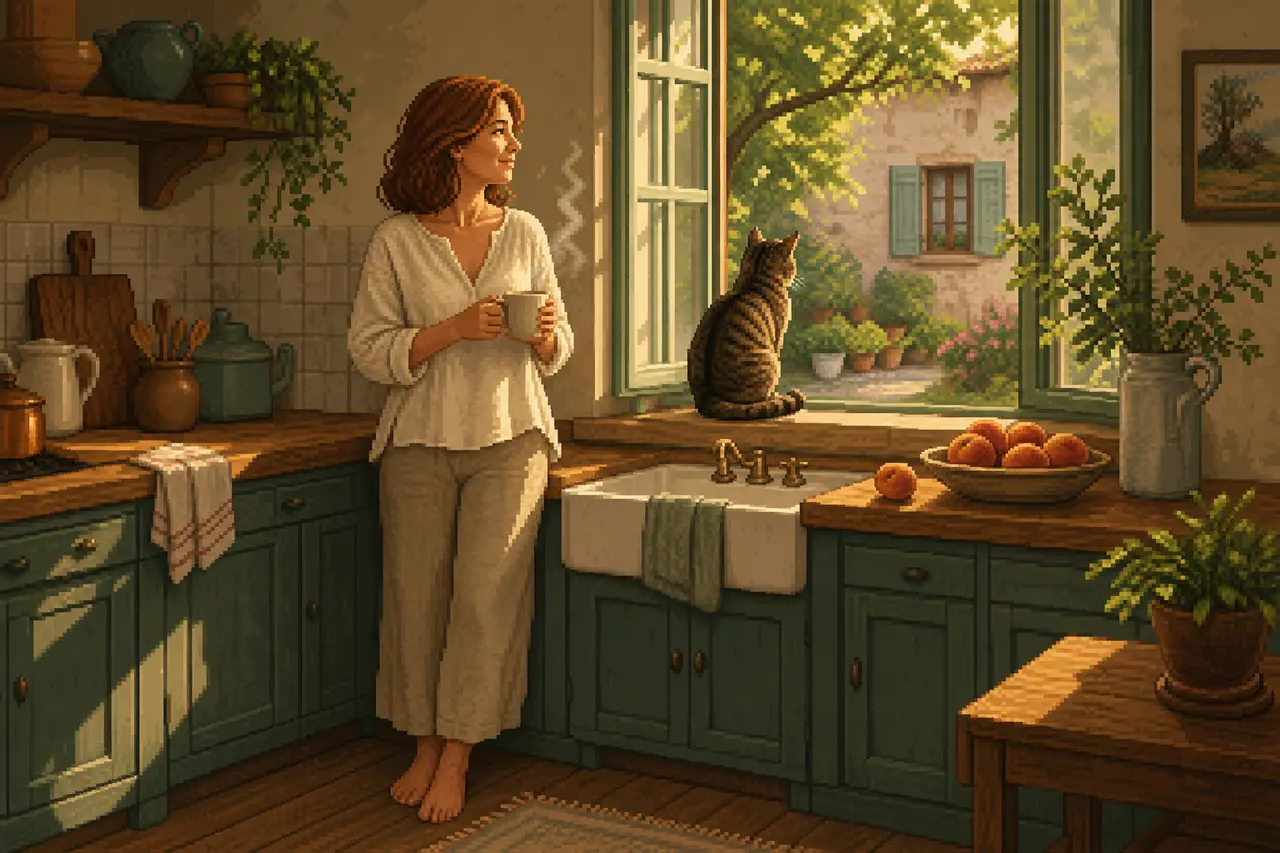
Imagine making yourself a cup of tea every morning. Not in passing, not while walking by. You boil the water, you wait, you pour. In those 3 minutes, nothing happens except this one process. That's your ritual. It stays because it's simple. And because it feels good.
Why this works
Why does it work? Because it's tangible. Because you can do it right away. Because it doesn't need preparation you have to plan first. A small ritual you can start today is better than a big one you want to begin next week. Start small. The rest will follow.
It becomes natural
Over time, it becomes natural. You stop thinking about it. It just belongs to your day. And that's the point: A ritual that stays is one that doesn't feel like effort. It feels like a small gift to yourself. Something you give yourself every single day.
Your steps for this week
- Choose a small act you enjoy: a drink, a deep breath, a look out the window.
- Do it with attention, not in passing. Give this act 2 minutes of your full presence.
- Repeat it at the same time each day. The timing anchors the ritual in your routine.
- Be gentle with yourself. If you forget, simply start again tomorrow.
Clear head: move tasks out of your mind
The free Clear Head list is not a normal task list. It gives everything circling in your mind a place. You can then sort what matters, what can wait and where you may want support.
- Write everything down first without judging it.
- Move important entries to the top and focus only on the next step.
- Let lower items wait or remove them when they no longer matter.
- Use the sorted overview in a conversation when you want to share tasks or ask for help.
How this article was created
AI helps us with research and drafting. Before publication, a real responsible person reviews both language versions, every claim and the related sources.
This article provides general information and supports self-observation. It is not a substitute for medical advice, diagnosis or treatment.